Why Homes At The Reserve Take Longer To Sell, And Why That Isn't The Warning It Looks Like
September 3, 2026
Six homes closed at The Reserve in the six months leading into August 2026. In that same window, at Toscana, a private golf community a few minutes away in Indian Wells, twenty-two closed. Run the math on either community and you get a supply figure: roughly six months of inventory sitting unsold at The Reserve, versus about a month and a half at Toscana. To a buyer scanning both neighborhoods on paper, that gap reads like a verdict. One market is moving. The other is stuck.
It isn't stuck. It's built differently, and the difference is the story worth understanding before you write an offer in either place.
Months of supply is a simple ratio: how many homes are currently listed, divided by how fast homes have been selling. At The Reserve, six active listings against a pace of roughly one closing a month works out to six months of supply. At Toscana, five listings against nearly four closings a month clears in about six weeks.
That comparison only holds up if the two communities are selling the same kind of product to the same kind of buyer pool. They aren't. Toscana's newer inventory, built from 2014 onward, has carried roughly a 33 percent premium per square foot over its 2004 to 2010 stock, and that newer product sells in about half the time of the older phase. That's a community where age of construction is doing a lot of the work, and where enough comparable homes exist that pricing converges quickly. The Reserve has never operated on that model.
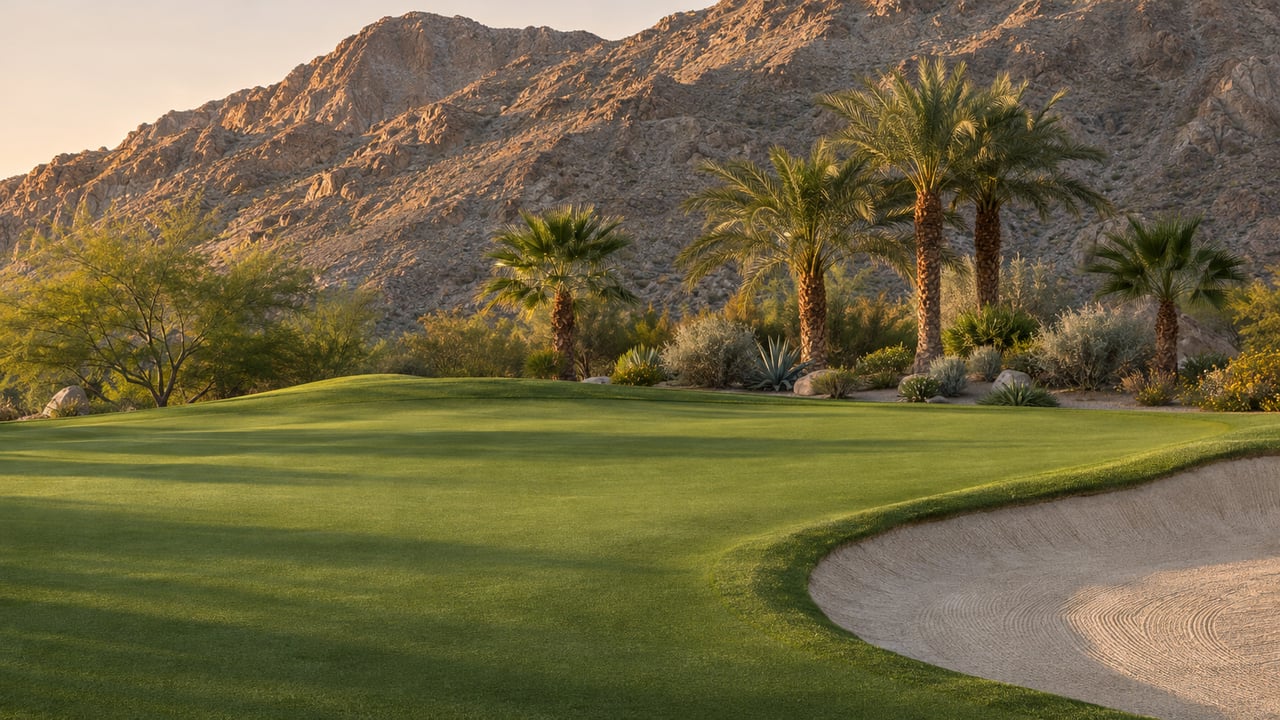
The Reserve's 780 acres, straddling the Indian Wells and Palm Desert boundary, were shaped by Lowe Enterprises over roughly a decade starting in the 1980s, and the build-out was organized around the land rather than a floor plan. More than 1,700 trees and shrubs were salvaged during construction and replanted rather than cleared, and the golf course, designed by Tom Weiskopf and Jay Morrish, runs 21 holes instead of the usual 18, routed through the desert washes and rock formations the developer chose to keep rather than grade flat.
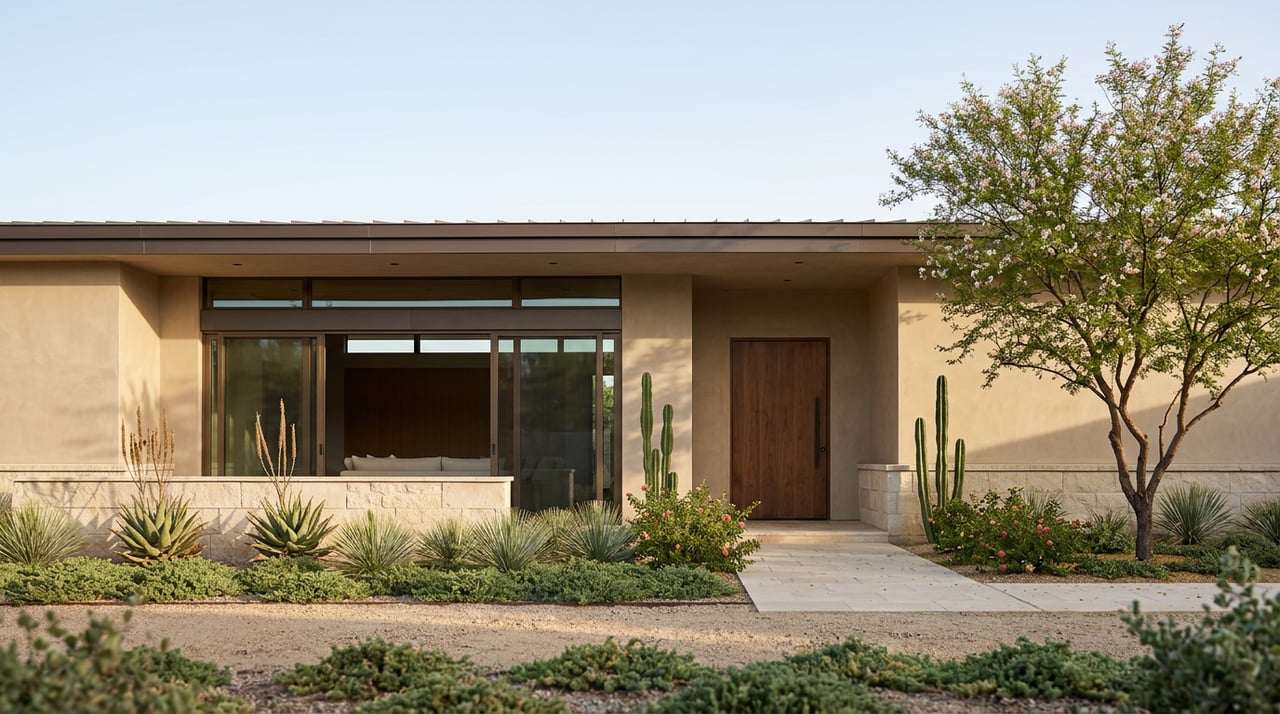
That same logic carries into the housing stock. Bungalows run 2,500 to 3,000 square feet. Casitas and villas stretch from 3,200 up to 5,500. Custom estates go as large as nearly 14,000 square feet. There is no single repeatable model here the way there is in a community built around a handful of floor plans, which means every sale is closer to a one-off appraisal than a straightforward comp pull. A buyer or seller can't point to "the same house down the street" the way they can at a tract-style golf community. That alone slows the market's ability to find a price and converge on it, independent of how desirable the neighborhood is.
Public listing data as of January 2026 put average time on market across Reserve sales near 75 days. That number, taken alone, suggests a sluggish neighborhood. But look specifically at homes that closed in the six months to early August 2026: the median sale price was $3,082,500, at a median $881 per square foot, and those sales closed at a median 96 percent of asking price, with the fastest correctly priced listings moving in about 37 days.
That's the real split. The 75-day average includes the full range of Reserve sales, including homes that sat because they were priced for a buyer pool that doesn't exist in a 250-home community. It reflects a market of individually designed homes with few direct comparisons, where buyers may value privacy and architectural distinction over a wider selection of comparable product.
| The Reserve | Toscana | |
|---|---|---|
| Closed sales, six months to early Aug 2026 | 6 | 22 |
| Active listings, Aug 2026 | 6 | 5 |
| Approx. months of supply | 6 | 1.5 |
| Housing stock | Bungalows to custom estates, 2,500 to nearly 14,000 sf | Standardized modern floor plans |
The Reserve's membership isn't open the way a public golf community's amenities are. Golf membership is capped at 250, and the equity category is reserved exclusively for homeowners. Anyone who wants access without owning has to come in through a separate non-resident category, often called the Hawk membership, or a social tier that doesn't include golf privileges at all.
A buyer weighing The Reserve against a larger, non-equity-capped community should consider that cap as part of the product. The neighborhood borders The Living Desert Zoo & Gardens on one side and UC Riverside's Deep Canyon Research Center on the other rather than another subdivision. Those borders are part of the setting, which differs from a community built for volume.
If you're cross-shopping Indian Wells communities on absorption rate alone, The Reserve will look like the slower option every time, and in raw supply terms it is. But slower absorption here isn't evidence of weaker demand. The homes don't repeat, and direct comparisons are limited. The pricing signal that actually matters isn't the six-month supply figure alone. It's the median 96-percent-of-ask result across sales, while the fastest correctly priced listings moved in about 37 days. The Reserve is architecturally individual and privately gated, one mile from El Paseo, with a housing stock that differs from faster-moving communities.
For a seller, that means resisting the instinct to chase a Toscana-style timeline with Toscana-style pricing logic. For a buyer, it means allowing for patience in a market where homes don't repeat, while recognizing that a well-priced Reserve estate still moves quickly once it finds its buyer.
Does six months of supply mean sellers at The Reserve should expect to negotiate hard on price? Not necessarily. The closed-sale data through early August 2026 shows sales closing at a median 96 percent of asking price. The long average time on market reflects a handful of overpriced or highly individual listings, not a community-wide discount.
Can I join The Reserve without buying a home there first? Equity golf membership is reserved for homeowners, but a non-resident category and a social tier are available to those who aren't ready to own. Terms and availability are set by the club directly and worth confirming before assuming either path fits your timeline.
Why does The Reserve compare so differently to Toscana if they're both minutes apart in the same corner of the valley? Toscana's inventory is newer and more standardized, which lets pricing converge quickly. The Reserve was built around preserved desert terrain on the Indian Wells and Palm Desert boundary, with a non-repeating mix of home sizes, which naturally produces fewer directly comparable sales and a longer runway to find the right buyer for each one.
Reading a neighborhood's pace correctly, rather than reacting to the headline supply number, is the difference between walking away from a strong opportunity and recognizing one. If you're weighing The Reserve against another Indian Wells club, Your Luxury Agent can walk through the specific comps that actually apply to your situation. Schedule a Private Consultation with Karista Smith to talk through what the current data means for your timeline.
This article is general information, not legal, tax or financial advice. Consult a qualified professional about your situation.
She brings extensive market knowledge and expertise in the luxury real estate market and consistently earns a position in Palm Springs Life's Top Real Estate Agent annual publication.